St John’s Wood property guide covering the area’s house prices, best roads, property types, schools, lifestyle, transport and what buyers should know before purchasing in NW8.
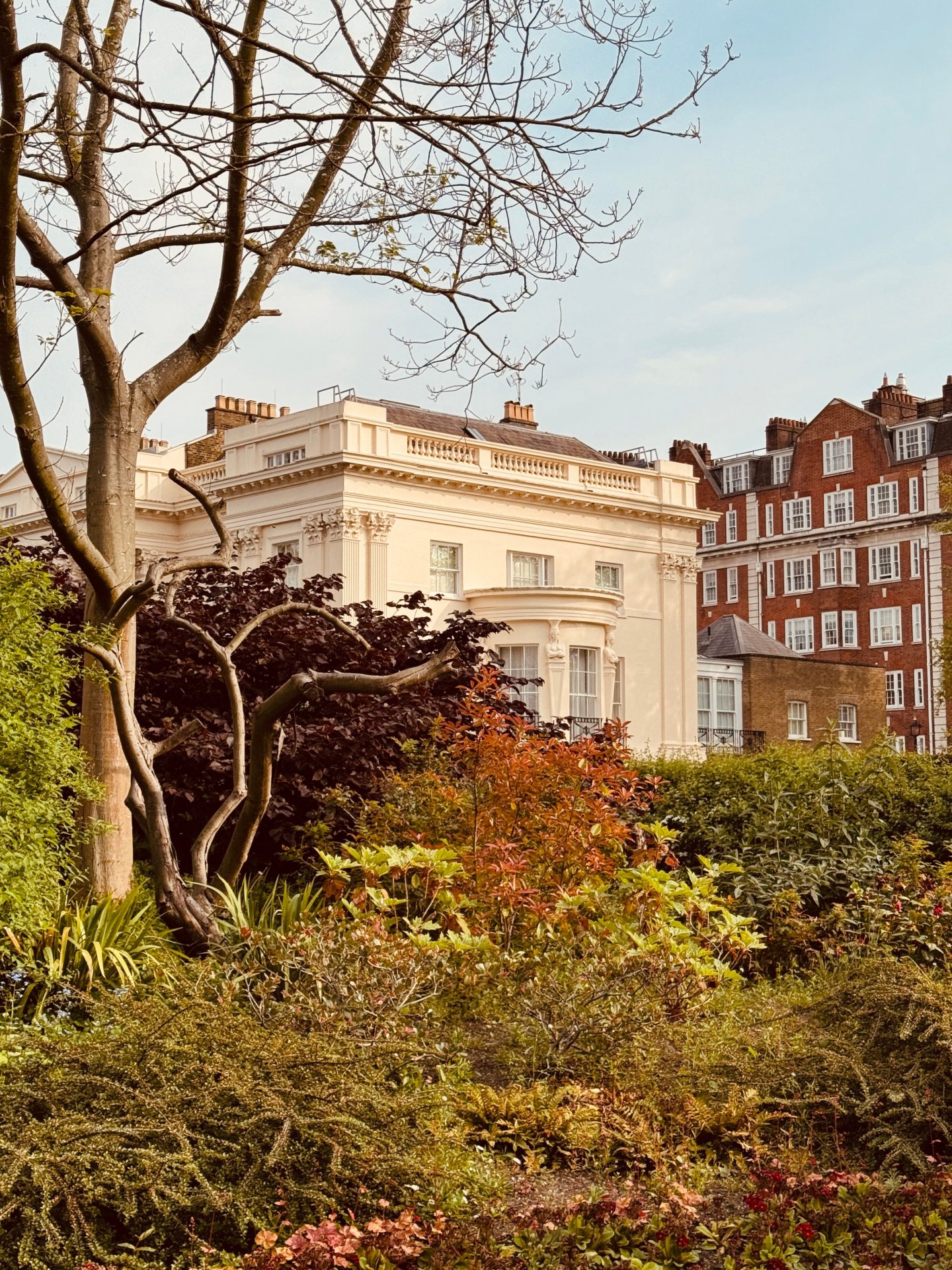
St John’s Wood is one of London’s most established prime residential neighbourhoods. Located immediately north of Regent’s Park, the area combines substantial period houses, detached properties, elegant mansion blocks and large lateral apartments with unusually good access to green space and central London.
For buyers looking for a London home that offers more space and privacy than many central neighbourhoods, while remaining close to Mayfair, Marylebone and the West End, St John’s Wood can be an attractive proposition.
But the St John’s Wood property market is highly nuanced. Values vary considerably according to the road, property type, plot, condition, outlook, garden, parking, building and proximity to Regent’s Park.
St John’s Wood Property Market: Prices at a Glance
| Factor | St John’s Wood |
|---|---|
| Postcode | Primarily NW8 |
| Borough | City of Westminster |
| Character | Prime residential |
| Green space | Regent’s Park, Primrose Hill nearby |
| Underground | St John’s Wood – Jubilee line |
| Major landmarks | Lord’s Cricket Ground, Abbey Road Studios |
| Property | Flats, mansion blocks, townhouses, semi-detached and detached houses |
| Market | Broad range from apartments to £10m+ houses |
| Buyer profile | UK and international private buyers, families, investors and HNW/UHNW clients |
Rightmove‘s latest Land Registry-based data records an overall average sold price of approximately £2.26 million in St John’s Wood over the preceding year. Flats averaged approximately £951,000, while terraced properties averaged around £4.28 million and semi-detached properties around £6.79 million.
These averages conceal substantial differences within the market. A one-bedroom apartment, a family house and a detached residence on a large plot are not comparable simply because they share an NW8 postcode.
At the prime end, current listings include detached houses priced around £10m–£12m and above, illustrating the considerable breadth of the St John’s Wood market.
What makes St John’s Wood a desirable place to live?
The principal attraction is the combination of space, greenery, privacy and central London accessibility.
Unlike some of the more intensely urban areas of Prime Central London, St John’s Wood has a predominantly residential character.
The streets around the area’s larger houses can feel surprisingly quiet, while Regent’s Park provides a substantial expanse of open space immediately to the south.
The area also benefits from:
- a recognised prime residential address
- substantial family houses
- private gardens
- mansion-block apartments
- good local amenities
- access to Regent’s Park
- proximity to Marylebone and Mayfair
- Jubilee line Underground access
- established international appeal
- a relatively discreet atmosphere
For many buyers, it represents a compromise between central London convenience and a more spacious residential lifestyle.

Where is St John’s Wood?
St John’s Wood is in the City of Westminster, immediately north of Regent’s Park.
The wider area sits between several well-known London neighbourhoods, including Marylebone, Primrose Hill, Swiss Cottage and Maida Vale.
The exact boundaries of what people describe as “St John’s Wood” can vary depending on context, particularly around its edges.
For property purposes, this matters.
A buyer searching for St John’s Wood may be shown properties close to Abbey Road, Regent’s Park, Swiss Cottage or Maida Vale that technically sit in adjacent areas or have a different micro-market.
A good property search therefore needs to define the desired location by streets and micro-locations, not simply by postcode.
St John’s Wood Property: Houses, Apartments and More
Houses in St John’s Wood
Houses are among the most tightly held properties in the area.
The best examples can offer substantially more space than is normally available within Prime Central London, together with gardens, parking and, occasionally, exceptional plots.
Period houses can provide:
- high ceilings
- original architectural features
- large reception rooms
- multiple bedrooms
- generous gardens
- basement accommodation
- potential for refurbishment
However, condition varies significantly.
A house requiring substantial modernisation may look inexpensive against a newly refurbished neighbouring property but can involve considerable construction, planning and project-management costs.
Detached houses
Detached houses are particularly scarce.
Where they combine a large plot, privacy, off-street parking and high-quality refurbishment, they occupy a distinct segment of the market.
Current publicly marketed examples demonstrate that exceptional detached homes in St John’s Wood can be offered at £10m+, with some exceeding £11m.
For buyers seeking this type of property, a conventional portal search may therefore provide only part of the picture.
Apartments and mansion blocks
Apartments make up a significant proportion of St John’s Wood transactions.
The area is known for established mansion blocks and purpose-built developments, many of which offer:
- porterage
- lifts
- communal gardens
- security
- larger floorplates
- convenient lock-up-and-leave ownership
The difference between individual buildings can be considerable.
When buying a prime London apartment, the building itself is effectively part of the property.
Buyers should therefore investigate:
- service charges
- sinking or reserve funds
- major works
- lease length
- freehold ownership
- management arrangements
- lift condition
- roof and façade maintenance
- restrictions on alterations
- subletting provisions
- historic and planned expenditure
House prices in St John’s Wood
One of the most frequently searched questions is:
How much does property cost in St John’s Wood?
The honest answer is: it depends heavily on what you are buying.
Current Land Registry-based figures provide useful context but should not be interpreted as a valuation of an individual property.
Rightmove currently reports:
- Overall average: approximately £2.26m
- Flats: approximately £951k
- Terraced properties: approximately £4.28m
- Semi-detached properties: approximately £6.79m
The data covers transactions registered up to July 2026.
Prime London conditions also remain nuanced.
Knight Frank’s March 2026 prime London data recorded a 1.4% three-month decline in St John’s Wood sales prices, while rental growth was flat over the same period.
This is important for buyers because the market should not be assessed simply by looking at current asking prices.
The distinction between asking price and achieved price remains critical.
What are the best roads in St John’s Wood?
Rather than identifying one “best” road, buyers should consider which streets best suit their requirements.
Avenue Road
Avenue Road is one of the most prestigious residential addresses in St John’s Wood.
It is particularly associated with substantial houses, larger plots and properties offering considerable privacy.
The street’s scale and proximity to Regent’s Park make it particularly relevant to buyers seeking a substantial family residence.
Hamilton Terrace
Hamilton Terrace is another established prime residential address.
The street contains elegant period houses and enjoys a particularly attractive relationship with Regent’s Park and the surrounding residential streets.
Individual properties differ significantly, so orientation, frontage, garden and condition need to be considered carefully.
Carlton Hill
Carlton Hill offers an attractive combination of period architecture and residential character.
The street and surrounding area contain substantial houses as well as more conventional family properties.
St John’s Wood Terrace
St John’s Wood Terrace has a varied property mix and provides access to some of the area’s established residential streets.
For buyers looking for character, the surrounding micro-area can be worth exploring rather than focusing only on the most famous addresses.
The roads around Regent’s Park
For many buyers, proximity to Regent’s Park is itself a major consideration.
However, being “near Regent’s Park” does not automatically mean a property commands the same value as another.
The precise outlook, road position, noise levels, garden orientation and walking route can all influence desirability.
Is St John’s Wood good for families?
St John’s Wood is particularly popular with families seeking more space while remaining within central London.
Family houses can provide gardens and multiple bedrooms, while the area’s apartments can offer larger floorplans than those commonly found in other central districts.
Regent’s Park is an obvious lifestyle advantage.
Families also benefit from the area’s proximity to schools in St John’s Wood and neighbouring districts.
However, school suitability should be assessed on a case-by-case basis.
Catchment areas, admissions requirements and school-run logistics can make a meaningful difference to which part of St John’s Wood is appropriate for a particular family.
Schools in and around St John’s Wood
Families considering a move to St John’s Wood should assess both local schools and the wider education network across northwest and central London.
The area includes independent and state educational options, while nearby neighbourhoods broaden the choice considerably.
For an international family, the assessment may also need to consider:
- international curricula
- French schools
- bilingual education
- private schools
- school transport
- admissions timelines
- proximity to the family home
For this reason, school selection should be incorporated into the property brief from the outset rather than considered after a house has been identified.
Transport from St John’s Wood
St John’s Wood Underground Station is on the Jubilee line.
The station is located on Wellington Road and provides direct Underground services towards central and east London.
The location can therefore work particularly well for buyers who need convenient access to:
- Bond Street
- Westminster
- London Bridge
- Canary Wharf
- the West End
The area is also served by bus routes.
For a property search, however, the exact distance from a house or apartment to the station can be important.
A ten-minute walk and a two-minute walk are materially different propositions, particularly for families, older residents or buyers who regularly travel by Underground.
Regent’s Park and outdoor space
Regent’s Park is one of the defining lifestyle assets of St John’s Wood.
For many buyers, access to the park is one of the principal reasons for considering the area.
It provides an unusually large amount of open space within central London and supports a lifestyle that can feel considerably less urban than the postcode suggests.
The relationship between a property and the park can also influence its appeal.
Properties with attractive views, easy access or a particularly quiet route towards the park can command additional interest.
Abbey Road Studios
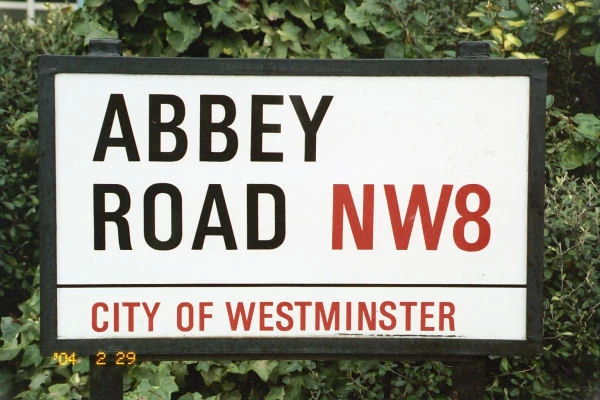
Abbey Road is one of St John’s Wood’s most recognisable addresses.
Abbey Road Studios has operated from its St John’s Wood site since the early 1930s and describes itself as the world’s first purpose-built recording studio.
The studios remain a working business rather than simply a tourist attraction.
The famous zebra crossing and studio are only a short walk from St John’s Wood Underground Station.
For residents, however, much of the surrounding area remains distinctly residential.
Lord’s Cricket Ground
Lord’s is another internationally recognised St John’s Wood landmark.
For cricket enthusiasts, living within walking distance of the ground is an obvious lifestyle attraction.
The wider area around Lord’s also provides a useful transition between St John’s Wood and neighbouring Marylebone.
Restaurants, cafés and local amenities
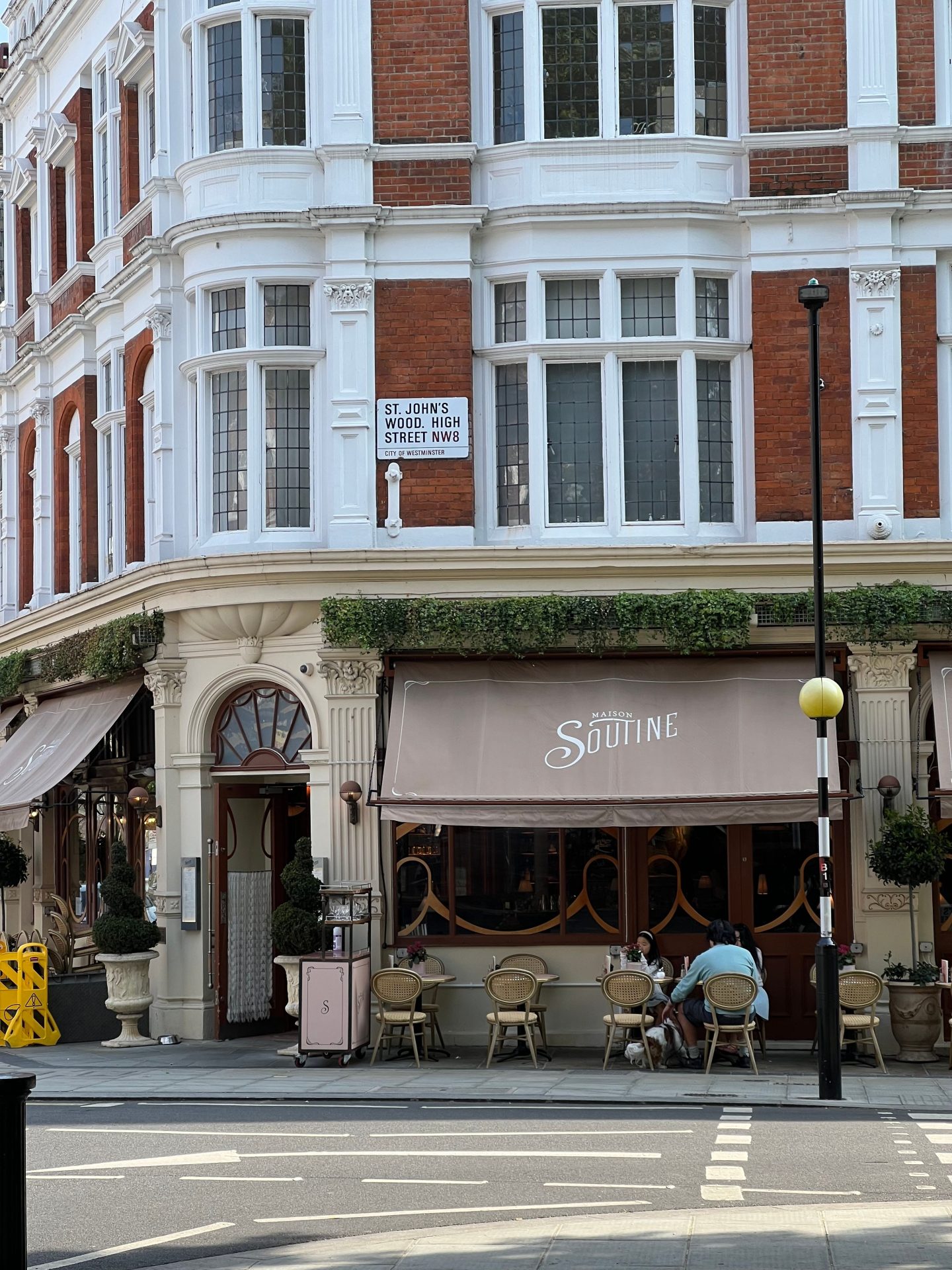
St John’s Wood High Street provides the area’s principal concentration of cafés, restaurants and everyday amenities.
The atmosphere is considerably more local and residential than the major shopping districts of central London.
Among the area’s established venues are French restaurant Soutine and Oslo Court, while the High Street and surrounding roads provide a range of cafés and restaurants.
For buyers, this contributes to the area’s appeal as a place to live rather than simply an investment address.
Buying property in St John’s Wood: what should you investigate?
A buyer should consider considerably more than the asking price.
1. The micro-location
Two properties a few streets apart can have very different characteristics.
Consider:
- traffic
- noise
- proximity to main roads
- local outlook
- neighbouring buildings
- walking distance to transport
- proximity to parks
- privacy
2. Planning potential
Do not assume that because a neighbouring property has a basement, rear extension or roof extension, your property will necessarily receive planning consent for the same work.
St John’s Wood includes conservation-area considerations and planning constraints can vary from property to property.
3. Condition
A beautifully presented property is not necessarily the best purchase.
Equally, a property requiring refurbishment is not necessarily a bargain.
The important question is whether the purchase price properly reflects the cost, risk and time associated with the required works.
4. Building management
For apartments, the building itself requires due diligence.
A low asking price can become less attractive if the building faces substantial upcoming expenditure.
5. Leasehold considerations
Lease length, service charges, restrictions and management arrangements should all be reviewed before committing to an acquisition.
6. Comparable evidence
The most relevant comparables are not necessarily the properties currently advertised online.
Recent completed transactions, similar properties in the same building or street and differences in condition and specification can materially affect value.
Is St John’s Wood good for an investment?
St John’s Wood can be relevant to investors, but the investment case depends on the property and strategy.
Different property types behave differently.
A family house, mansion-block apartment and detached residence should not be assessed using the same assumptions.
Buyers should consider:
- acquisition price
- rental demand
- achievable rent
- service charges
- maintenance
- refurbishment requirements
- transaction costs
- taxation
- liquidity
- long-term capital value
- exit market
For a private buyer, the lifestyle utility of the property may be at least as important as its investment characteristics.
Buying off-market property in St John’s Wood
St John’s Wood is an area where discreet opportunities can be particularly relevant.
Some owners of substantial houses or prime apartments may prefer to test the market quietly rather than launch an unrestricted public sale.
For a buyer seeking a specific type of property — particularly a detached house, substantial family house or large lateral apartment — an effective search may therefore need to extend beyond the major portals.
Off-market does not automatically mean cheaper.
In many cases, the principal benefit is access and suitability, rather than price.
A property may never appear on Rightmove but may still be available to a credible, qualified buyer through an established agent or private introduction.
Why use a buying agent in St John’s Wood?
A conventional estate agent acts for the seller.
An independent buying agent works exclusively for the buyer.
This distinction can be particularly useful when purchasing a high-value property.
The role can include:
- Defining the acquisition brief
- Identifying suitable properties
- Monitoring the public market
- Approaching relevant agents and contacts
- Exploring off-market opportunities
- Arranging and attending viewings
- Assessing relative value
- Identifying potential issues
- Advising on negotiation
- Coordinating due diligence
- Working with the client’s legal, tax and other advisers
- Managing purchase progression through to completion
For an international buyer, the value can be even greater because the buying agent effectively becomes an informed local representative.
St John’s Wood for international buyers
The area can be particularly suitable for international families looking for a London base.
The reasons include:
- central location
- substantial homes
- proximity to green space
- international community
- private education options
- access to the West End
- discreet residential streets
- range of apartment and house options
For an overseas buyer, however, the acquisition process involves considerably more than finding the right house.
Currency, financing, taxation, ownership structures, source-of-funds requirements, insurance, surveys, legal due diligence and property management may all need to be considered.
An experienced professional team is therefore particularly important.
Frequently asked questions about St John’s Wood property
Is St John’s Wood an expensive area?
Yes. St John’s Wood is a prime London residential market with a wide range of values. Current Land Registry-based data puts the overall average sold price at approximately £2.26m, although this figure combines very different property types.
How much is a house in St John’s Wood?
Prices vary significantly. Larger houses can run into several million pounds, while exceptional detached properties can exceed £10m. Current publicly marketed examples include detached houses around £10m–£12m.
Is St John’s Wood a good place to live?
The area is particularly attractive to people looking for a quieter, residential environment with access to Regent’s Park while remaining close to central London.
Is St John’s Wood good for families?
It can be particularly suitable for families because of the availability of larger houses, gardens, apartments, schools and access to Regent’s Park. The most suitable location depends on the family’s individual school and lifestyle requirements.
What is the best road in St John’s Wood?
There is no single best road. Avenue Road, Hamilton Terrace and Carlton Hill are among the area’s established prime residential addresses, but suitability depends on the individual property and the buyer’s requirements.
Is St John’s Wood in Prime Central London?
St John’s Wood is generally regarded as part of London’s prime residential market, although classifications of “Prime Central London” vary between agencies and research providers.
Is St John’s Wood good for international buyers?
It can be particularly attractive to international buyers seeking a substantial London residence, privacy, green space and access to central London.
Is there off-market property in St John’s Wood?
Yes. As in other prime London neighbourhoods, some properties are marketed discreetly or introduced privately rather than being publicly advertised. Access depends heavily on relationships, timing, buyer credibility and the specific brief.
Buying property in St John’s Wood with Domus Holmes
Domus Holmes is an independent UK and international property buying agency acting exclusively for buyers.
We do not sell property and do not represent vendors.
For clients buying in St John’s Wood, our role can include:
- acquisition strategy
- property sourcing
- on-market and off-market searches
- property assessment
- valuation and price advice
- negotiation
- due diligence
- professional adviser coordination
- purchase progression
For private clients, HNW and UHNW individuals, families and family offices, the objective is to make the acquisition process more informed, discreet and efficient.
A St John’s Wood property search should begin with the right brief, not with a list of properties.
The more precisely the requirements are defined — budget, property type, minimum space, garden, parking, preferred roads, school requirements, privacy, refurbishment tolerance and intended use — the more effectively the market can be searched.
Considering buying in St John’s Wood?
If you are looking for a house or apartment in St John’s Wood, NW8, Domus Holmes can advise on the acquisition strategy and search process.
Independent buyer representation. Prime and super-prime property. UK and international.
St John’s Wood property guide covering house prices, the best roads, property types, schools, transport, lifestyle and what buyers should know before purchasing in NW8.
St John’s Wood is one of London’s most established prime residential neighbourhoods. Located immediately north of Regent’s Park, the area combines substantial period houses, detached properties, elegant mansion blocks and large lateral apartments with unusually good access to green space and central London.
For buyers looking for a London home that offers more space and privacy than many central neighbourhoods, while remaining close to Mayfair, Marylebone and the West End, St John’s Wood can be an attractive proposition.
But the St John’s Wood property market is highly nuanced.
Values vary considerably according to the road, property type, plot, condition, outlook, garden, parking, building and proximity to Regent’s Park. For that reason, headline averages should never be treated as a substitute for detailed comparable analysis.
St John’s Wood property market at a glance
| Factor | St John’s Wood |
|---|---|
| Postcode | Primarily NW8 |
| Borough | City of Westminster |
| Character | Prime residential |
| Green space | Regent’s Park, Primrose Hill nearby |
| Underground | St John’s Wood – Jubilee line |
| Major landmarks | Lord’s Cricket Ground, Abbey Road Studios |
| Property | Flats, mansion blocks, townhouses, semi-detached and detached houses |
| Market | Broad range from apartments to £10m+ houses |
| Buyer profile | UK and international private buyers, families, investors and HNW/UHNW clients |
Rightmove’s latest Land Registry-based data records an overall average sold price of approximately £2.26 million in St John’s Wood over the preceding year. Flats averaged approximately £951,000, while terraced properties averaged around £4.28 million and semi-detached properties around £6.79 million.
These averages conceal substantial differences within the market. A one-bedroom apartment, a family house and a detached residence on a large plot are not comparable simply because they share an NW8 postcode.
At the prime end, current listings include detached houses priced around £10m–£12m and above, illustrating the considerable breadth of the St John’s Wood market.
What makes St John’s Wood a desirable place to live?
The principal attraction is the combination of space, greenery, privacy and central London accessibility.
Unlike some of the more intensely urban areas of Prime Central London, St John’s Wood has a predominantly residential character.
The streets around the area’s larger houses can feel surprisingly quiet, while Regent’s Park provides a substantial expanse of open space immediately to the south.
The area also benefits from:
- a recognised prime residential address
- substantial family houses
- private gardens
- mansion-block apartments
- good local amenities
- access to Regent’s Park
- proximity to Marylebone and Mayfair
- Jubilee line Underground access
- established international appeal
- a relatively discreet atmosphere
For many buyers, it represents a compromise between central London convenience and a more spacious residential lifestyle.
Where is St John’s Wood?
St John’s Wood is in the City of Westminster, immediately north of Regent’s Park.
The wider area sits between several well-known London neighbourhoods, including Marylebone, Primrose Hill, Swiss Cottage and Maida Vale.
The exact boundaries of what people describe as “St John’s Wood” can vary depending on context, particularly around its edges.
For property purposes, this matters.
A buyer searching for St John’s Wood may be shown properties close to Abbey Road, Regent’s Park, Swiss Cottage or Maida Vale that technically sit in adjacent areas or have a different micro-market.
A good property search therefore needs to define the desired location by streets and micro-locations, not simply by postcode.
What types of property are available in St John’s Wood?
Houses in St John’s Wood
Houses are among the most tightly held properties in the area.
The best examples can offer substantially more space than is normally available within Prime Central London, together with gardens, parking and, occasionally, exceptional plots.
Period houses can provide:
- high ceilings
- original architectural features
- large reception rooms
- multiple bedrooms
- generous gardens
- basement accommodation
- potential for refurbishment
However, condition varies significantly.
A house requiring substantial modernisation may look inexpensive against a newly refurbished neighbouring property but can involve considerable construction, planning and project-management costs.
Detached houses
Detached houses are particularly scarce.
Where they combine a large plot, privacy, off-street parking and high-quality refurbishment, they occupy a distinct segment of the market.
Current publicly marketed examples demonstrate that exceptional detached homes in St John’s Wood can be offered at £10m+, with some exceeding £11m.
For buyers seeking this type of property, a conventional portal search may therefore provide only part of the picture.
Apartments and mansion blocks
Apartments make up a significant proportion of St John’s Wood transactions.
The area is known for established mansion blocks and purpose-built developments, many of which offer:
- porterage
- lifts
- communal gardens
- security
- larger floorplates
- convenient lock-up-and-leave ownership
The difference between individual buildings can be considerable.
When buying a prime London apartment, the building itself is effectively part of the property.
Buyers should therefore investigate:
- service charges
- sinking or reserve funds
- major works
- lease length
- freehold ownership
- management arrangements
- lift condition
- roof and façade maintenance
- restrictions on alterations
- subletting provisions
- historic and planned expenditure
House prices in St John’s Wood
One of the most frequently searched questions is:
How much does property cost in St John’s Wood?
The honest answer is: it depends heavily on what you are buying.
Current Land Registry-based figures provide useful context but should not be interpreted as a valuation of an individual property.
Rightmove currently reports:
- Overall average: approximately £2.26m
- Flats: approximately £951k
- Terraced properties: approximately £4.28m
- Semi-detached properties: approximately £6.79m
The data covers transactions registered up to July 2026.
Prime London conditions also remain nuanced.
Knight Frank’s March 2026 prime London data recorded a 1.4% three-month decline in St John’s Wood sales prices, while rental growth was flat over the same period.
This is important for buyers because the market should not be assessed simply by looking at current asking prices.
The distinction between asking price and achieved price remains critical.
What are the best roads in St John’s Wood?
Rather than identifying one “best” road, buyers should consider which streets best suit their requirements.
Avenue Road
Avenue Road is one of the most prestigious residential addresses in St John’s Wood.
It is particularly associated with substantial houses, larger plots and properties offering considerable privacy.
The street’s scale and proximity to Regent’s Park make it particularly relevant to buyers seeking a substantial family residence.
Hamilton Terrace
Hamilton Terrace is another established prime residential address.
The street contains elegant period houses and enjoys a particularly attractive relationship with Regent’s Park and the surrounding residential streets.
Individual properties differ significantly, so orientation, frontage, garden and condition need to be considered carefully.
Carlton Hill
Carlton Hill offers an attractive combination of period architecture and residential character.
The street and surrounding area contain substantial houses as well as more conventional family properties.
St John’s Wood Terrace
St John’s Wood Terrace has a varied property mix and provides access to some of the area’s established residential streets.
For buyers looking for character, the surrounding micro-area can be worth exploring rather than focusing only on the most famous addresses.
The roads around Regent’s Park
For many buyers, proximity to Regent’s Park is itself a major consideration.
However, being “near Regent’s Park” does not automatically mean a property commands the same value as another.
The precise outlook, road position, noise levels, garden orientation and walking route can all influence desirability.
Is St John’s Wood good for families?
St John’s Wood is particularly popular with families seeking more space while remaining within central London.
Family houses can provide gardens and multiple bedrooms, while the area’s apartments can offer larger floorplans than those commonly found in other central districts.
Regent’s Park is an obvious lifestyle advantage.
Families also benefit from the area’s proximity to schools in St John’s Wood and neighbouring districts.
However, school suitability should be assessed on a case-by-case basis.
Catchment areas, admissions requirements and school-run logistics can make a meaningful difference to which part of St John’s Wood is appropriate for a particular family.
Schools in and around St John’s Wood
Families considering a move to St John’s Wood should assess both local schools and the wider education network across northwest and central London.
The area includes independent and state educational options, while nearby neighbourhoods broaden the choice considerably.
For an international family, the assessment may also need to consider:
- international curricula
- French schools
- bilingual education
- private schools
- school transport
- admissions timelines
- proximity to the family home
For this reason, school selection should be incorporated into the property brief from the outset rather than considered after a house has been identified.
Transport from St John’s Wood
St John’s Wood Underground Station is on the Jubilee line.
The station is located on Wellington Road and provides direct Underground services towards central and east London.
The location can therefore work particularly well for buyers who need convenient access to:
- Bond Street
- Westminster
- London Bridge
- Canary Wharf
- the West End
The area is also served by bus routes.
For a property search, however, the exact distance from a house or apartment to the station can be important.
A ten-minute walk and a two-minute walk are materially different propositions, particularly for families, older residents or buyers who regularly travel by Underground.
Regent’s Park and outdoor space
Regent’s Park is one of the defining lifestyle assets of St John’s Wood.
For many buyers, access to the park is one of the principal reasons for considering the area.
It provides an unusually large amount of open space within central London and supports a lifestyle that can feel considerably less urban than the postcode suggests.
The relationship between a property and the park can also influence its appeal.
Properties with attractive views, easy access or a particularly quiet route towards the park can command additional interest.
Abbey Road Studios
Abbey Road is one of St John’s Wood’s most recognisable addresses.
Abbey Road Studios has operated from its St John’s Wood site since the early 1930s and describes itself as the world’s first purpose-built recording studio.
The studios remain a working business rather than simply a tourist attraction.
The famous zebra crossing and studio are only a short walk from St John’s Wood Underground Station.
For residents, however, much of the surrounding area remains distinctly residential.
Lord’s Cricket Ground
Lord’s is another internationally recognised St John’s Wood landmark.
For cricket enthusiasts, living within walking distance of the ground is an obvious lifestyle attraction.
The wider area around Lord’s also provides a useful transition between St John’s Wood and neighbouring Marylebone.
Restaurants, cafés and local amenities
St John’s Wood High Street provides the area’s principal concentration of cafés, restaurants and everyday amenities.
The atmosphere is considerably more local and residential than the major shopping districts of central London.
Among the area’s established venues are French restaurant Soutine and Oslo Court, while the High Street and surrounding roads provide a range of cafés and restaurants.
For buyers, this contributes to the area’s appeal as a place to live rather than simply an investment address.
Buying property in St John’s Wood: what should you investigate?
A buyer should consider considerably more than the asking price.
1. The micro-location
Two properties a few streets apart can have very different characteristics.
Consider:
- traffic
- noise
- proximity to main roads
- local outlook
- neighbouring buildings
- walking distance to transport
- proximity to parks
- privacy
2. Planning potential
Do not assume that because a neighbouring property has a basement, rear extension or roof extension, your property will necessarily receive planning consent for the same work.
St John’s Wood includes conservation-area considerations and planning constraints can vary from property to property.
3. Condition
A beautifully presented property is not necessarily the best purchase.
Equally, a property requiring refurbishment is not necessarily a bargain.
The important question is whether the purchase price properly reflects the cost, risk and time associated with the required works.
4. Building management
For apartments, the building itself requires due diligence.
A low asking price can become less attractive if the building faces substantial upcoming expenditure.
5. Leasehold considerations
Lease length, service charges, restrictions and management arrangements should all be reviewed before committing to an acquisition.
6. Comparable evidence
The most relevant comparables are not necessarily the properties currently advertised online.
Recent completed transactions, similar properties in the same building or street and differences in condition and specification can materially affect value.
Is St John’s Wood good for an investment?
St John’s Wood can be relevant to investors, but the investment case depends on the property and strategy.
Different property types behave differently.
A family house, mansion-block apartment and detached residence should not be assessed using the same assumptions.
Buyers should consider:
- acquisition price
- rental demand
- achievable rent
- service charges
- maintenance
- refurbishment requirements
- transaction costs
- taxation
- liquidity
- long-term capital value
- exit market
For a private buyer, the lifestyle utility of the property may be at least as important as its investment characteristics.
Buying off-market property in St John’s Wood
St John’s Wood is an area where discreet opportunities can be particularly relevant.
Some owners of substantial houses or prime apartments may prefer to test the market quietly rather than launch an unrestricted public sale.
For a buyer seeking a specific type of property — particularly a detached house, substantial family house or large lateral apartment — an effective search may therefore need to extend beyond the major portals.
Off-market does not automatically mean cheaper.
In many cases, the principal benefit is access and suitability, rather than price.
A property may never appear on Rightmove but may still be available to a credible, qualified buyer through an established agent or private introduction.
Why use a buying agent in St John’s Wood?
A conventional estate agent acts for the seller.
An independent buying agent works exclusively for the buyer.
This distinction can be particularly useful when purchasing a high-value property.
The role can include:
- Defining the acquisition brief
- Identifying suitable properties
- Monitoring the public market
- Approaching relevant agents and contacts
- Exploring off-market opportunities
- Arranging and attending viewings
- Assessing relative value
- Identifying potential issues
- Advising on negotiation
- Coordinating due diligence
- Working with the client’s legal, tax and other advisers
- Managing purchase progression through to completion
For an international buyer, the value can be even greater because the buying agent effectively becomes an informed local representative.
St John’s Wood for international buyers
The area can be particularly suitable for international families looking for a London base.
The reasons include:
- central location
- substantial homes
- proximity to green space
- international community
- private education options
- access to the West End
- discreet residential streets
- range of apartment and house options
For an overseas buyer, however, the acquisition process involves considerably more than finding the right house.
Currency, financing, taxation, ownership structures, source-of-funds requirements, insurance, surveys, legal due diligence and property management may all need to be considered.
An experienced professional team is therefore particularly important.
Frequently asked questions about St John’s Wood property
Is St John’s Wood an expensive area?
Yes. St John’s Wood is a prime London residential market with a wide range of values. Current Land Registry-based data puts the overall average sold price at approximately £2.26m, although this figure combines very different property types.
How much is a house in St John’s Wood?
Prices vary significantly. Larger houses can run into several million pounds, while exceptional detached properties can exceed £10m. Current publicly marketed examples include detached houses around £10m–£12m.
Is St John’s Wood a good place to live?
The area is particularly attractive to people looking for a quieter, residential environment with access to Regent’s Park while remaining close to central London.
Is St John’s Wood good for families?
It can be particularly suitable for families because of the availability of larger houses, gardens, apartments, schools and access to Regent’s Park. The most suitable location depends on the family’s individual school and lifestyle requirements.
What is the best road in St John’s Wood?
There is no single best road. Avenue Road, Hamilton Terrace and Carlton Hill are among the area’s established prime residential addresses, but suitability depends on the individual property and the buyer’s requirements.
Is St John’s Wood in Prime Central London?
St John’s Wood is generally regarded as part of London’s prime residential market, although classifications of “Prime Central London” vary between agencies and research providers.
Is St John’s Wood good for international buyers?
It can be particularly attractive to international buyers seeking a substantial London residence, privacy, green space and access to central London.
Is there off-market property in St John’s Wood?
Yes. As in other prime London neighbourhoods, some properties are marketed discreetly or introduced privately rather than being publicly advertised. Access depends heavily on relationships, timing, buyer credibility and the specific brief.
Buying property in St John’s Wood with Domus Holmes
Domus Holmes is an independent UK and international property buying agency acting exclusively for buyers.
We do not sell property and do not represent vendors.
For clients buying in St John’s Wood, our role can include:
- acquisition strategy
- property sourcing
- on-market and off-market searches
- property assessment
- valuation and price advice
- negotiation
- due diligence
- professional adviser coordination
- purchase progression
For private clients, HNW and UHNW individuals, families and family offices, the objective is to make the acquisition process more informed, discreet and efficient.
A St John’s Wood property search should begin with the right brief, not with a list of properties.
The more precisely the requirements are defined — budget, property type, minimum space, garden, parking, preferred roads, school requirements, privacy, refurbishment tolerance and intended use — the more effectively the market can be searched.
Considering buying in St John’s Wood?
If you are looking for a house or apartment in St John’s Wood, NW8, Domus Holmes can advise on the acquisition strategy and search process.
Independent buyer representation. Prime and super-prime property. UK and international.