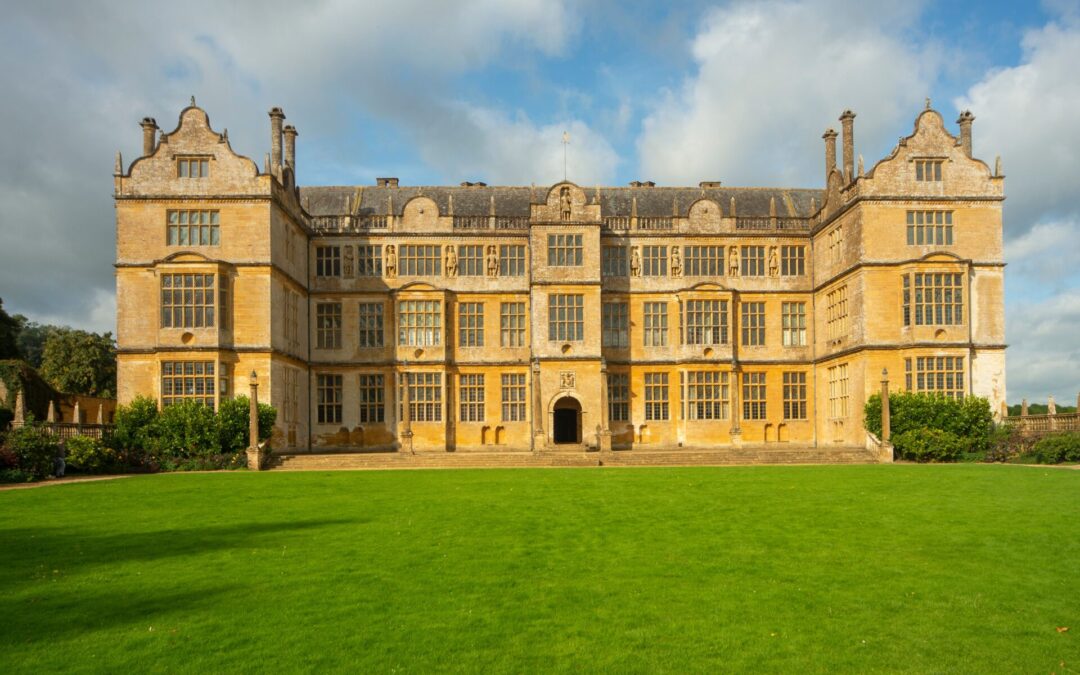
Buying an English country estate is very different from buying a conventional residential property.
For a high-net-worth individual, family office or international family, the appeal is obvious: privacy, land, historic architecture, proximity to London and the opportunity to acquire a substantial property that can remain within the family for generations.
But the more exceptional and complex the estate, the more important the due diligence becomes.
A historic English country estate may combine a principal residence, listed buildings, agricultural land, woodland, cottages, commercial activity, private infrastructure and centuries of legal history.
For an overseas buyer unfamiliar with the UK property market, understanding what is actually being acquired is therefore just as important as finding the property itself.
A recent PCD Group case study illustrates this particularly well.
A £22 million English country estate: a case study in due diligence
I recently joined tax specialist Graeme Privett for a PCD Group podcast case study examining an acquisition by a Florida-based family.
The family was considering a £22 million, 600-acre estate in the Cotswolds, comprising a substantial Grade II listed manor house together with farmland, woodland, a converted barn used as a wedding venue and eight holiday cottages.
The case study explored the issues that can arise when an international family acquires a substantial English country estate, including listed-building restrictions, mixed-use Stamp Duty Land Tax, UK residency and the Foreign Income and Gains regime, ownership structures, succession considerations, title issues, rights of way and the operation of commercial elements of the estate.
The full case study is available on the PCD Group website:
The case study reinforces an important principle:
Buying an English country estate is not simply a property purchase. It is often the acquisition of a complex collection of assets, rights, obligations and potential liabilities.
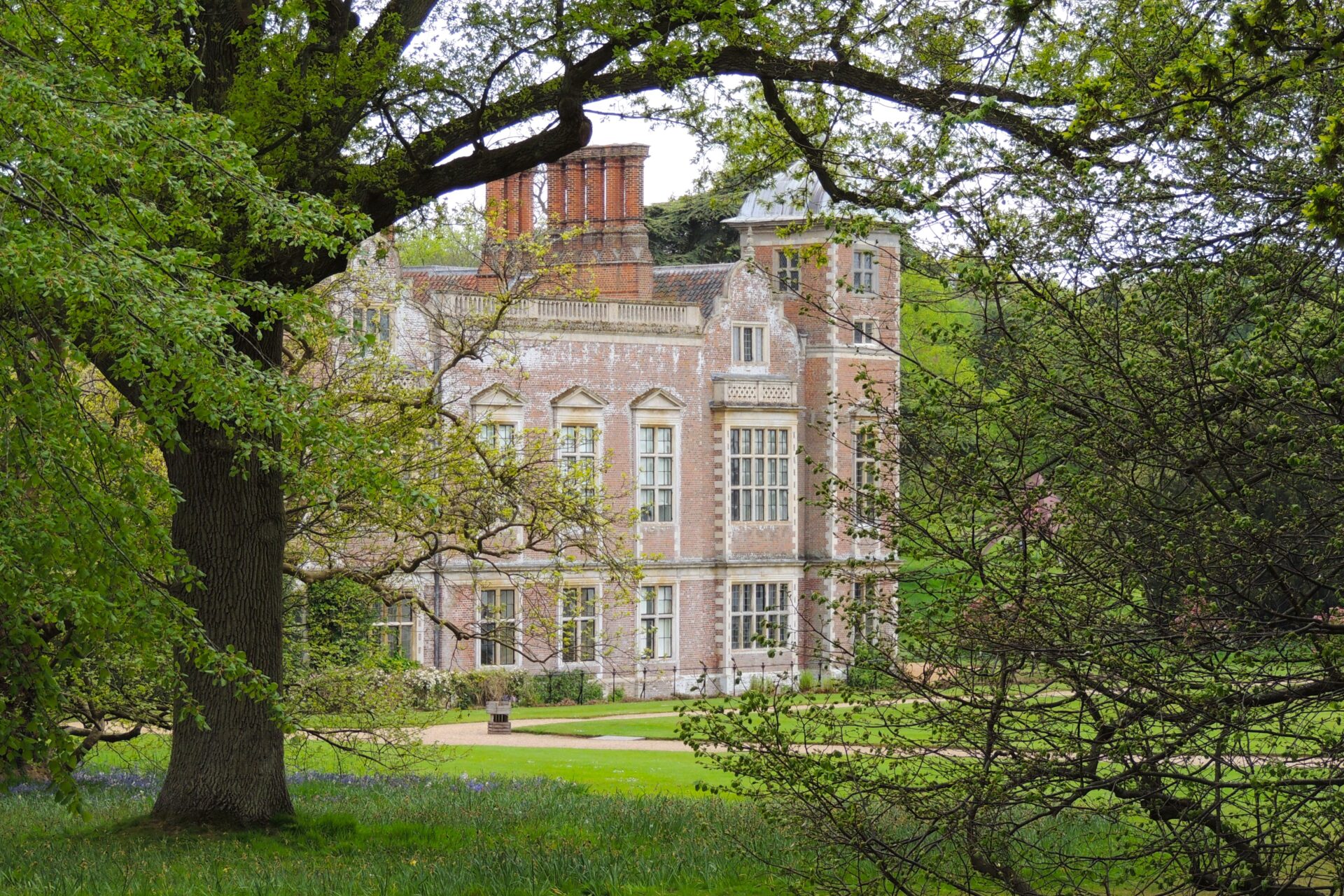
Why buying a country estate is different
A prime London townhouse may have its complexities, but an English country estate introduces an entirely different layer of due diligence.
The buyer may be acquiring:
- A listed historic residence
- Multiple buildings
- Hundreds of acres of land
- Agricultural land
- Woodland
- Watercourses
- Private roads and access
- Holiday accommodation
- Equestrian facilities
- Commercial operations
- Private drainage
- Employment arrangements
- Public rights of way
- Historic easements and covenants
- Development or planning opportunities
The estate therefore needs to be assessed as a whole.
The question is not simply whether the main house is beautiful.
It is whether the property, land, infrastructure, planning position, legal title and intended use all work for the buyer’s objectives.
For buyers looking for substantial rural property, this is one of the reasons an experienced Luxury Property Buying Agent can add value well beyond simply identifying properties for sale.
1. Listed building status can significantly restrict alterations
Many of England’s most desirable country houses are listed buildings.
For an overseas buyer, this can be an important cultural and practical difference.
A buyer may assume that, because they own the property, they can make substantial alterations to it.
That assumption can be wrong.
Listed building controls can affect alterations to a building’s historic fabric. Even seemingly straightforward projects — such as changes to windows, services, layouts or the installation of modern systems — may require specialist advice and potentially formal consent.
For a family purchasing an estate as a long-term residence, this needs to be considered before acquisition.
For example, if the family’s requirements include:
- Extensive air conditioning
- Internal reconfiguration
- Enhanced security
- A swimming pool
- Staff accommodation
- Additional buildings
- Modern mechanical and electrical systems
then the feasibility of those requirements should be investigated before the buyer becomes fully committed to the property.
A buying agent’s role is not to determine whether planning or listed-building consent will be granted.
That is a matter for the appropriate planning professionals.
The role is to identify the question early enough for the buyer to obtain a properly informed answer.
2. The surrounding land requires its own due diligence
One of the defining attractions of an English country estate is the land.
It can also be one of the biggest sources of complexity.
An estate may include agricultural fields, woodland, rivers, ponds, tracks and areas of land subject to different rights or arrangements.
Due diligence may therefore need to examine:
- Ownership of individual parcels
- Boundaries
- Rights of way
- Easements
- Access rights
- Agricultural arrangements
- Woodland management
- Watercourses
- Riparian rights
- Public footpaths
- Bridleways
- Neighbouring rights
- Covenants and restrictions
A buyer looking for complete privacy, for example, needs to understand whether public footpaths or bridleways cross the estate.
They cannot simply be closed because the property has changed hands.
Similarly, a river crossing the land can create legal and practical considerations that would never arise in a conventional urban property purchase.
This is particularly relevant to international buyers who may initially focus on the house itself and assume that the surrounding acreage is simply an extension of the garden.
It isn’t.
The land can have its own legal, operational and financial characteristics.
3. Country estates can have private infrastructure
Another issue that can surprise overseas buyers is infrastructure.
A large estate may not be connected to the same services as a conventional urban property.
Private drainage and sewage treatment systems, private roads, wells, water supplies, heating systems and other infrastructure can all require investigation.
The relevant questions include:
Who owns the infrastructure?
Who maintains it?
What condition is it in?
Are there historic rights or obligations attached to it?
What happens if it fails?
For an estate that is intended to become a principal or substantial second home, these considerations can have a direct impact on both the cost and practicality of ownership.
4. Mixed-use property can complicate Stamp Duty Land Tax
Tax planning is another area where a country estate can differ significantly from a conventional home.
A large estate may contain both residential and non-residential elements.
The potential Stamp Duty Land Tax treatment therefore needs to be considered carefully, based on the actual characteristics and use of the property.
This is precisely why tax advice should be obtained before committing to an acquisition.
The objective should not be to find a tax treatment after the transaction has been agreed.
It should be to understand the potential tax implications before the buyer signs.
In the PCD case study, Graeme Privett and I explored this issue alongside wider questions around ownership, residency and succession.
For an overseas family, this is an important distinction: the property acquisition strategy and the family’s wider tax planning should be considered together, rather than as two completely separate exercises.
5. Ownership structure matters for international families
For a UK resident buying a family home, personal ownership may appear relatively straightforward.
For an international family office, the picture can be considerably more complicated.
The family may need to consider:
- Who should own the property?
- Should it be held personally or through another structure?
- What are the UK tax implications?
- What are the US tax implications?
- Are there UK reporting requirements?
- What are the succession implications?
- How will the property ultimately pass between generations?
- Does the proposed ownership structure work with the family’s wider wealth planning?
These questions belong with specialist legal and tax advisers.
However, they should be raised before the acquisition structure becomes difficult or expensive to change.
This is one reason I see the buying agent as part of the wider acquisition team rather than simply as a property search resource.
The buying agent does not replace the family’s solicitor or tax adviser.
Instead, the role is to help ensure that the property being acquired is properly understood and that the right professional questions are being asked at the right stage.
6. US buyers need advice on both sides of the Atlantic
For US families buying an English country estate, there is an additional consideration.
The acquisition needs to be viewed from both the UK and US perspectives.
A family may have questions around:
- UK residence
- The UK-US tax treaty
- Foreign income and gains
- US federal taxation
- Ownership structures
- Estate and succession planning
- UK inheritance tax
- Reporting obligations
The precise treatment will depend on the family’s circumstances and should always be assessed by appropriately qualified advisers.
In the PCD case study, the family was considering spending around 120 days each year in the UK. That immediately brought residence and tax considerations into the conversation, including the UK’s Foreign Income and Gains regime and the need to consider the longer-term position beyond its initial four-year window.
The key point for the buyer is simple:
UK property acquisition cannot be considered in isolation from the family’s international tax and wealth-planning position.
7. Title issues can emerge late in the transaction
One of the most important lessons from the PCD case study was the potential for historic issues to surface surprisingly late.
The fictional transaction involved a neighbouring landowner disputing aspects of historic title documentation and rights of access shortly before exchange.
This illustrates why patience is particularly important when buying an English country estate.
Historic estates can have complex ownership histories stretching back decades or even centuries.
There may be old rights, covenants, easements, access arrangements or boundary issues that require investigation.
In the case study, the legal team was dealing with more than 150 enquiries, including restrictions relating to livestock breeds and fencing on one parcel of land.
A buyer should never assume that a property being marketed at £22 million means its legal history is straightforward.
8. Commercial elements create another layer of complexity
Some country estates are no longer purely residential.
They may include:
- Holiday cottages
- Wedding or events businesses
- Equestrian operations
- Agricultural businesses
- Farm shops
- Hospitality facilities
- Sporting activities
A buyer therefore needs to understand whether they are acquiring:
the property only,
or
the property together with an operating business.
That distinction can have significant legal, tax and practical consequences.
It may also affect whether the buyer actually wants to continue operating the business.
In the PCD case study, the potential acquisition of the wedding venue and holiday cottage business raised questions around its VAT position, existing employees and whether the operation should continue as an existing business or be restructured.
For a family office, these are not peripheral questions.
They can materially affect the nature of the acquisition.
9. The professional team needs to be assembled early
At this level, the buyer’s professional team can become extensive.
Depending on the property, it may include:
- Property lawyers
- Tax advisers
- Surveyors
- Planning consultants
- Architects
- Structural specialists
- Drainage specialists
- Environmental consultants
- Agricultural advisers
- Security consultants
- Employment lawyers
- Insurance advisers
- Wealth and succession advisers
The important point is not to involve every possible specialist unnecessarily.
It is to identify which specialists are required for this particular estate — and involve them at the appropriate stage.
This is where an experienced buying agent can provide considerable value.
A well-run acquisition should allow the different advisers to understand the property, the client’s objectives and the questions that need to be answered before the transaction reaches an irreversible stage.
10. The buying agent’s role goes far beyond finding the property
For a family office or UHNW client, the buying agent’s role should extend considerably beyond finding properties online or arranging viewings.
At Domus Holmes, I see the role as providing independent representation throughout the acquisition process.
That includes:
Defining the acquisition brief
Understanding how the family intends to use the estate, who will occupy it, what level of privacy is required and what facilities or future opportunities matter.
Searching the market
Identifying suitable properties through the conventional market as well as private and off-market channels.
For exceptional country estates, an Off-Market Buying Agent can be particularly valuable because some of the most desirable properties may be offered privately or discreetly rather than through a conventional public marketing campaign.
Initial due diligence
Assessing obvious issues around location, planning, land, access, neighbouring properties, infrastructure and intended use before recommending a property to the client.
Managing the acquisition strategy
Advising on the appropriate approach to the selling agent, negotiation and terms.
Coordinating specialists
Helping ensure that the appropriate lawyers, tax advisers, surveyors, planners and other specialists are engaged and that important questions are identified early.
Challenging assumptions
If a buyer believes that a swimming pool, new driveway, guest accommodation or substantial renovation is possible, the question should be:
What evidence supports that assumption?
Protecting the buyer’s interests
The selling agent’s responsibility is to the vendor.
An independent buying agent works on the buyer’s side of the transaction.
That distinction becomes particularly important when the acquisition involves millions of pounds and potentially a multi-generational family asset.
The acquisition process should begin with the end in mind
One of the biggest advantages of independent representation is the ability to consider the buyer’s intended use before recommending a property.
For example, a family might initially brief its advisers to find:
“A beautiful country estate in the Cotswolds with at least 500 acres.”
That sounds specific.
It isn’t necessarily specific enough.
What does the family actually need?
Is the property intended as a principal residence, a European base or a family retreat?
Will it be occupied for several months a year or only during holidays?
Does the family require staff accommodation?
Is equestrian use important?
Should there be potential for further development?
Does the family want agricultural operations to continue?
Does privacy matter more than proximity to an airport?
Does the buyer want commercial activities on the estate — or want to eliminate them?
These questions can fundamentally change the search.
This is where a professional Home Purchase service at the prime and super-prime level becomes more than simply a property search.
The objective is to establish what the buyer is actually trying to achieve before beginning the acquisition.
Why location matters when buying an English country estate
Location is another area where overseas buyers can benefit from independent advice.
The Cotswolds may be the obvious choice for an international family seeking an English country estate, but it is far from the only option.
The wider West Country offers a broad range of country houses, estates and rural properties across Somerset, Gloucestershire, Wiltshire, Devon and Dorset.
For families wanting access to major cities, Bristol and Bath can also provide an interesting combination of urban amenities and access to surrounding countryside.
Bath, for example, provides access to the Cotswolds and surrounding rural areas while offering the architectural, cultural and lifestyle advantages of a historic city.
Bristol offers a different proposition, with a larger business environment, international connections and access to attractive countryside across the wider South West.
For an overseas buyer, the correct location therefore needs to be considered in terms of more than scenery.
Access to airports, London, schools, healthcare, amenities, sporting facilities, family requirements and the practical realities of running a large estate can all influence the right choice.
Buying an English country estate requires a different mindset
Perhaps the most important lesson for an overseas buyer is that an English country estate transaction should not be rushed simply because the buyer has the financial capacity to move quickly.
The existence of substantial wealth does not eliminate planning restrictions, historic rights, title issues, tax considerations or physical constraints.
In fact, the greater the value and complexity of the estate, the more important it becomes to understand those issues before exchange.
The objective of due diligence is not to find a reason not to buy.
It is to establish:
What are we buying?
What can we do with it?
What obligations come with it?
What risks are we accepting?
And is this still the right property once we understand all of the above?
Buying a country estate as an overseas family office
For a US family office or UHNW family with limited experience of the UK property market, independent representation can be particularly valuable.
The buyer does not necessarily need another person simply to show them houses.
They need someone who understands the UK prime property market, knows the questions that should be asked and can work alongside the family’s existing advisers.
That becomes particularly important when acquiring an estate in the £10 million, £20 million or £50 million-plus price bracket.
At this level, the cost of making the wrong assumption can be considerably greater than the cost of investigating it properly.
For international buyers, there is also a significant practical advantage in having one trusted property adviser who understands the brief, the family’s expectations and the UK market — and who can help bridge the gap between the buyer and the wider professional team.
Final thoughts
An English country estate can be an extraordinary acquisition.
For the right family, it can provide a principal or secondary residence, privacy, land, lifestyle and a legacy asset that can remain within the family for generations.
But its appeal should never replace proper due diligence.
The £22 million Cotswolds case study discussed with PCD Group demonstrates just how many different disciplines can intersect within one country estate transaction.
For international buyers, the challenge is not simply finding the dream property.
It is understanding the property well enough to know whether it really is the right acquisition.
That is where independent buying-agent representation can add genuine value.
At Domus Holmes, we advise HNW and UHNW individuals, family offices and international buyers on the search and acquisition of prime and super-prime property across the UK and internationally.
Whether the requirement is an English country estate, a townhouse in Bath or Bristol, a property in the wider West Country or an exceptional off-market opportunity, our role is to provide independent representation, market intelligence, due diligence and strategic guidance throughout the acquisition.
Read the full PCD Group case study:
US Family Office Acquiring a £22 Million English Country Estate: What US Families Need to Know Before They Sign.
And watch the full podcast on the PCD YouTube channel: https://www.youtube.com/watch?v=Sy2Vz-nplrQ

Frequently Asked Questions (FAQ’s)
Is buying an English country estate different from buying a normal house?
Yes. A country estate can incorporate multiple buildings, extensive land, agricultural or commercial activity, listed structures, private infrastructure, rights of way and complex historic title issues. The scope of due diligence can therefore be considerably greater than for a conventional residential property.
Can a foreign buyer buy an English country estate?
Yes. Overseas buyers can acquire property in England, although the tax, ownership, reporting and wider legal implications will depend on the buyer’s circumstances. International buyers should obtain appropriate UK and overseas legal and tax advice before proceeding.
What due diligence is required when buying a country estate?
Depending on the property, due diligence can include title and boundary investigations, planning and listed-building matters, structural surveys, drainage, environmental issues, rights of way, access, agricultural arrangements, commercial activities, tax and ownership structure.
Should I use a buying agent to purchase an English country estate?
For a complex prime or super-prime acquisition, particularly where the buyer is overseas, an independent buying agent can provide an additional layer of representation and coordination. The buying agent can help define the brief, identify suitable properties, assess potential issues, coordinate professional advisers and negotiate on the buyer’s behalf.
What should a US family consider before buying property in England?
A US family should consider the property itself as well as UK and US tax implications, ownership structure, UK residence, succession planning, Stamp Duty Land Tax, potential inheritance tax exposure and the practical implications of owning and operating the property. Specialist UK and US advisers should be involved before committing to the acquisition.